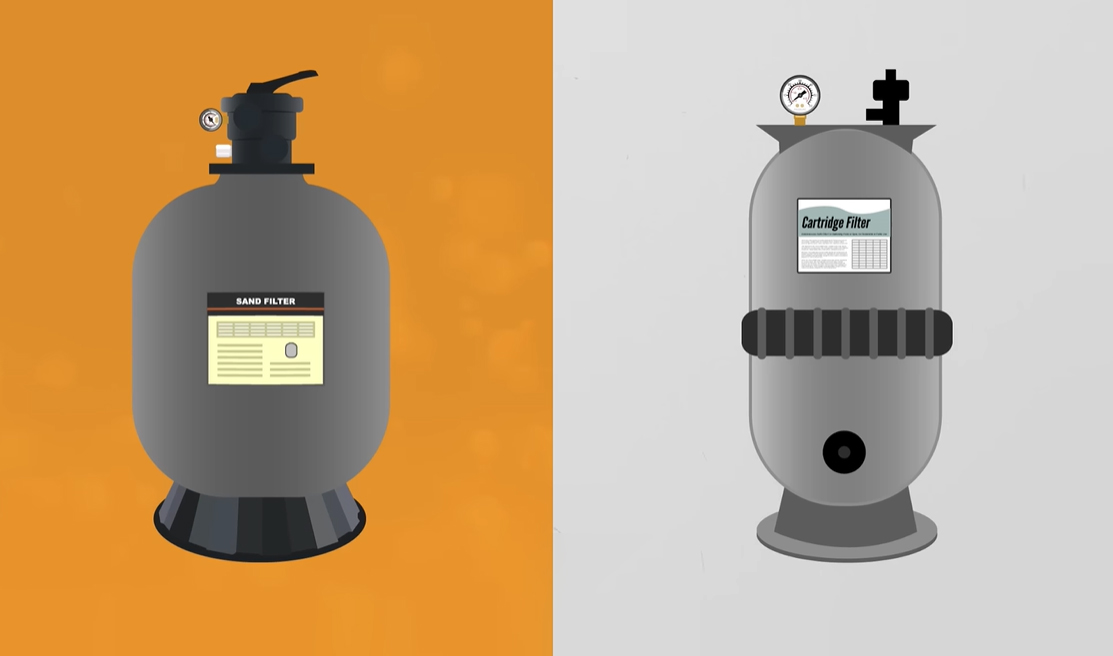
A sand filter, as the name suggests, is a large filter tank filled with sand. When a pool pump draws water from a skimmer, the water passes through the sand filter media. Filter sand and its alternatives are relatively inexpensive, and the filter cartridge itself is often cheaper than other cartridges.
Each grain of sand has a texture; if you look at it under a microscope, you'll see it has many tiny, rough edges, which help trap contaminants and debris as they pass through. Filter sand can filter out any particles 20 micrometers or larger. How big is a micrometer? A human hair is about 50 micrometers in diameter, or about 0.05 millimeters. This means that filter sand cannot completely filter them out. Over time, as more and more water flows through the filter, the rough edges of the sand gradually wear down due to erosion, and the smooth surface can no longer trap as many contaminants. Fortunately, you only need to replace the sand in your filter every 5-7 years. During this time, you can clean your sand filter by backwashing; the pressure gauge on the filter will tell you when the internal pressure is too high, meaning backwashing is necessary.
Backwashing refers to reversing the flow of water in the filter through the wastewater pipe. It's a simple process, but it results in the loss of some pool water and some chemicals. Swimming pool sand filters are best suited for large swimming pools because they don't clog as easily as other filters.
However, sand filters have the smallest filtration area, only 2-6 square feet. As we mentioned, sand filters cannot capture small particles like certain bacteria. This means you really need to monitor the chemical composition of your pool water closely. If there isn't enough disinfectant in the pool to kill those tiny bacteria, your sand filter will also have difficulty capturing them.
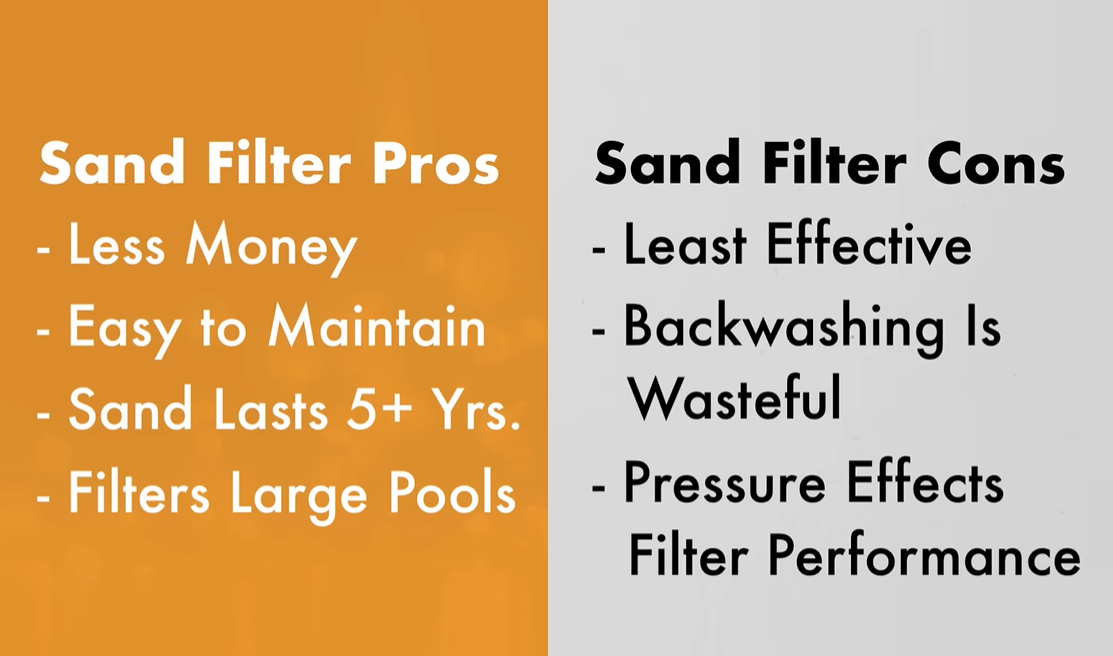
In summary, the advantages of sand filters are: they are less expensive, easier to maintain, the sand can be used for 5-7 years without needing replacement, and sand filters are ideal for filtering large swimming pools. The disadvantages are that they are the least efficient filters, only able to filter larger particles, and the filtration area is small. Backwashing wastes water and results in the loss of some chemicals. Furthermore, the filter's efficiency decreases when pressure builds up.
Next is the cartridge filter, which consists of a plastic cylinder surrounded by pleated polyester filter media. Water flows into the tank and through the pleats. This filter can capture particles as small as 10 microns, meaning it's more effective than a sand filter. Cartridge filters also have the largest filtration area, ranging from approximately 200-600 square feet. However, they are less effective in very large swimming pools. Cartridge filters perform well even at low speeds (such as with variable speed pumps), and reducing pump speed helps extend their lifespan.
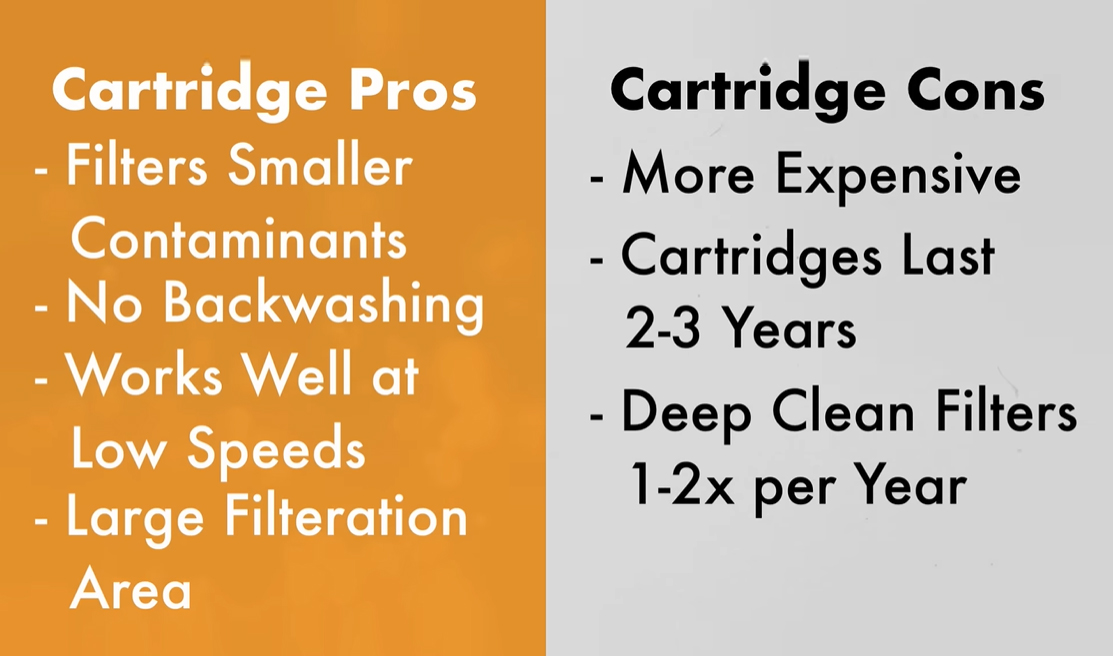
Cartridge filters are generally more expensive than sand filters and require more cleaning. When the filter has collected contaminants, you need to remove the cartridge from the tank and rinse it with a hose to remove any dirt and debris. Once or twice a year, your filter needs a deep cleaning; you'll need to spray it with a cartridge cleaner and then soak it in diluted hydrochloric acid or a chemical cartridge cleaning solution. Finally, you'll need to replace the cartridges every few years. In summary, the advantages of cartridge filters are as follows: they can filter contaminants as small as 10 microns; no backwashing is required, meaning less waste of water and pool chemicals; they perform well at low pump speeds and offer the largest filtration area. The disadvantages are that they are more expensive; your cartridges only last 2-3 years; you need to perform a deep clean of the filter 1-2 times per year; and they are not the best filters for large swimming pools. Before purchasing a pool filter, you need to ensure that your pool pump is the correct size. If your pump size does not match the pool, your filter will not function properly.
What's The Right Size Pool Pump and Filter?
Filter rated flow rates are measured in gallons per minute (GPM) per square foot (GPM). The filter flow rate must be the same as or higher than the pump flow rate. For pool filters, it is best to choose a larger size. If you need help or a filter, be sure to check out our filter guide above to determine the appropriate pump size for your pool.
So, when choosing a filter, which is better, a sand filter or a cartridge filter? For the clearest pool water and best filtration, choose a cartridge filter. They capture smaller particles, cover a larger filtration area, and operate at lower pump speeds. However, if you have a very large pool prone to algae growth, choose a sand filter. Sand filters' backwashing mechanism makes them very easy to clean. If you have further questions about pool maintenance, please visit www.hotook.com for more help.