What are the specifications for salt chlorinators?
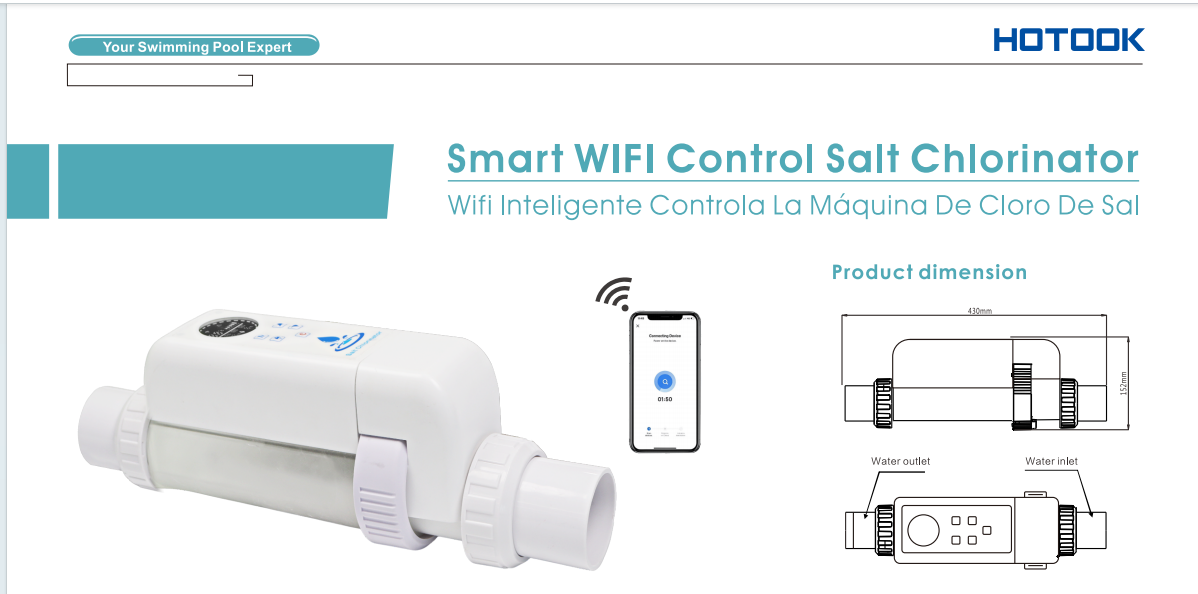 Salt chlorinators generate chlorine through the electrolysis of saltwater, providing continuous water disinfection for swimming pools. As saltwater disinfection technology becomes widely adopted in residential pools, commercial pools, and large-scale projects, understanding the specifications available on the global market is crucial for distributors, brand clients, contractors, and purchasers when selecting the right products.
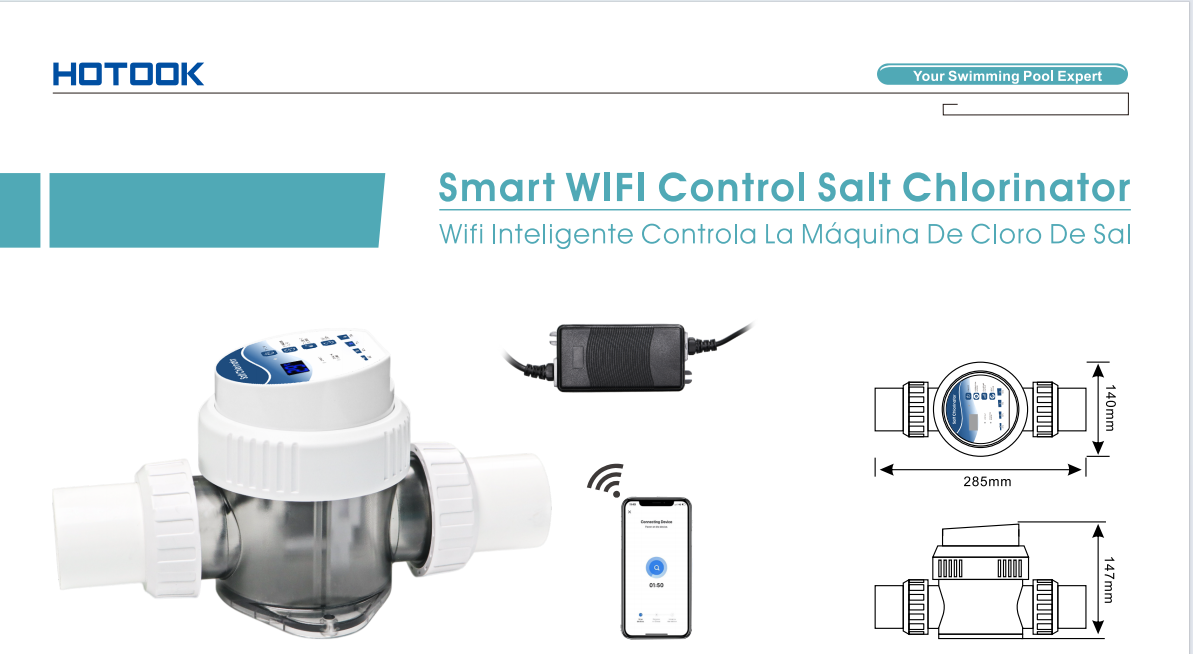 HOTOOK specializes in providing salt chlorinator solutions to global clients, with a product range covering residential pools, commercial pools, and large-scale projects. This article outlines common salt chlorinator specifications and their corresponding application scenarios.
Classifying Salt Chlorinators by Chlorine Output
The most critical parameter for a salt chlorinator is its chlorine output, typically measured in grams per hour (g/h). Different output capacities are suited to varying pool sizes and application requirements.
Common specifications include:
7–12 g/h:Small residential pools
15–30 g/h: Residential and villa pools
35–50 g/h: Large residential and small commercial pools
70–100 g/h: Hotel and commercial pools
125–180 g/h: Large commercial and engineering projects
200–500+ g/h:Public pools, water parks, and large-scale aquatic facilities
electing Specifications Based on Application Scenarios
For residential pools, models with outputs of 10–30 g/h are typically chosen (e.g., 10, 15, 20, 25, and 30 g/h).
Commercial pools require higher chlorine output capabilities; specifications such as 35, 50, 70, and 100 g/h are suitable for hotels, fitness centers, resorts, and commercial pool facilities.
For large-scale projects, high-output models—such as 150, 180, 250, 350, and 500 g/h—can be considered to meet the water treatment demands of large public pools and water parks.
For B2B purchasers, establishing a product portfolio with multiple output levels helps address diverse market and project requirements.
What other important specifications should be considered for salt chlorinators?
In addition to chlorine output, a comprehensive salt chlorinator specification sheet should typically include the following parameters:
Salt Concentration: Different models have varying salinity requirements; the common operating range is approximately 3,000–5,000 ppm, though specific product requirements should be consulted.
Pipe Size: Common specifications in overseas markets include 1.5-inch and 2-inch, as well as metric sizes like 50 mm and 63 mm. Pipe diameter compatibility affects the installation of the unit within the pool circulation system.
Power Specifications:Depending on the target market, configurations such as 110–120V/60Hz or 220–240V/50Hz are used.
Electrolytic Cell: Commercial products typically utilize titanium electrodes and may feature self-cleaning or polarity-reversing functions to minimize calcium buildup and reduce maintenance needs.
Control Functions: Modern salt chlorinators offer features such as digital displays, adjustable chlorine output, salinity and water temperature monitoring, timer-based operation, external control interfaces, and Wi-Fi or app-based control.
HOTOOK Salt Chlorinator Solutions
HOTOOK specializes in salt chlorinator solutions, with a product range covering residential, commercial, and large-scale engineering applications.
For commercial and large pools, HOTOOK salt chlorinators deliver high chlorine output combined with various smart control features, including clock displays, dual-timer settings, built-in salinity monitoring, and multiple operating modes.
Notably, the dual-timer setting accommodates disinfection needs across different time periods, while timer settings are retained after power outages, eliminating the need for reconfiguration. Additionally, the units support both 1.5-inch and 2-inch pipe connections, ensuring compatibility with a wide range of pool circulation systems.
HOTOOK also offers scheduled operation, external control capabilities, and circulation modes to meet the diverse control requirements of residential pools, commercial pools, and engineering projects.
How to Choose the Right Salt Chlorinator Specifications?
When selecting a salt chlorinator, consider factors such as chlorine output, pool volume, operating time, water temperature, bather load, salt concentration, pipe diameter, voltage, and control requirements.
Distributors and brand clients can establish a specification matrix covering residential products (10–30 g/h), commercial products (50–100 g/h), and large-scale engineering products (150–500+ g/h). For OEM and ODM clients, chlorine output, electrical specifications, branding, packaging, and control functions can be customized to suit target markets.
Conclusion
The global salt chlorinator market encompasses a wide range of product specifications, spanning from small residential units to large-scale commercial systems capable of producing hundreds of grams of chlorine per hour.
Understanding these specifications enables distributors, contractors, purchasers, and brand clients to select the right equipment based on specific project requirements.
Leveraging its manufacturing expertise and OEM/ODM capabilities, HOTOOK provides salt chlorinator solutions for residential, commercial, and large-scale projects to clients worldwide.