Introduction
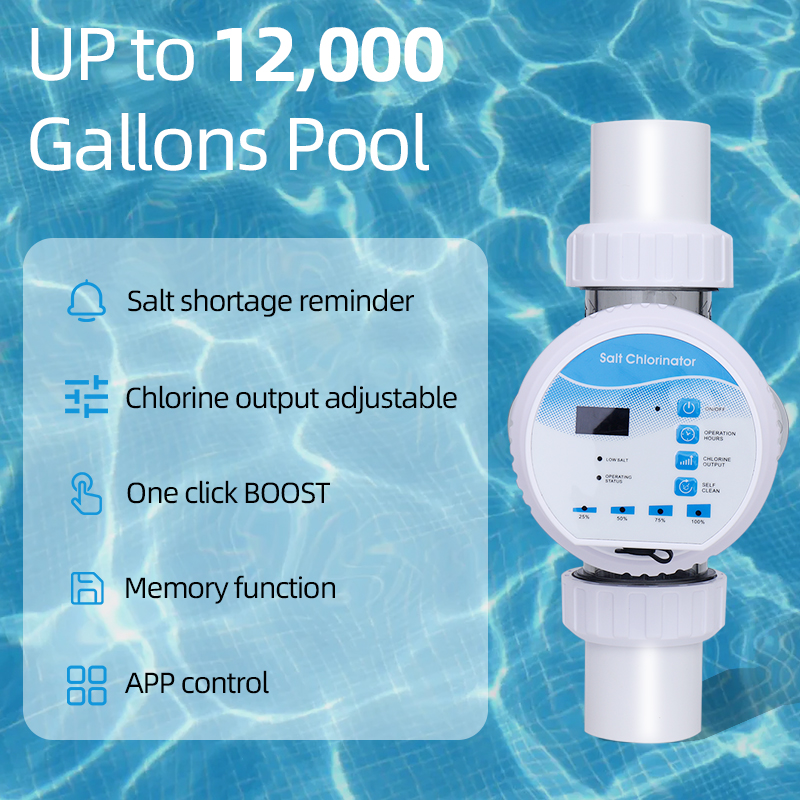
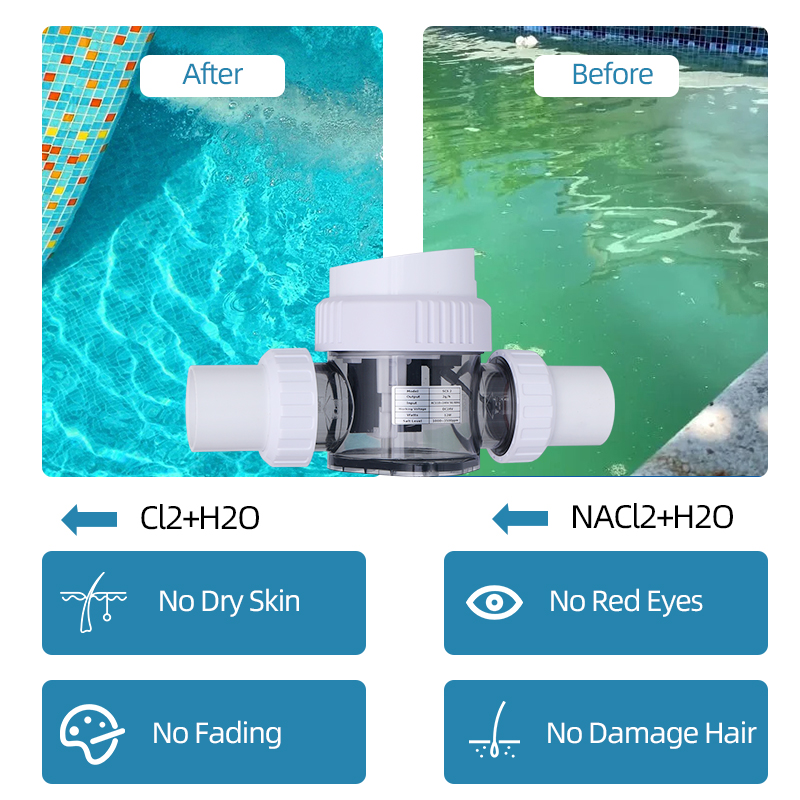
The HOTOOK SCS salt chlorinator is a compact salt-water chlorination system manufactured by Shenzhen HOTOOK. It disinfects water by electrolyzing saline solution to generate chlorine and is suitable for small-to-medium-sized swimming pools and spas.
Established in 2006, HOTOOK is a Chinese manufacturer of salt chlorinators specializing in pool filtration systems. The brand holds multiple international certifications (such as CE, RoHS, and UL) and offers OEM/ODM customization services.
Specification
Model | Chlorine Output | Recommended Pool Capacity |
SCS2 | 2 g/h | ≤ 10 m³ |
SCS4 | 4g/h | ≤ 10 -18m³ |
SCS6 | 6g/h | ≤ 13-27m³ |
SCS8 | 8g/h | ≤ 35 m³ |
SCS10 | 10g/h | ≤ 50m³ |
Key Features
According to official specifications, the main features of the SCS series include:
Adjustable Chlorine Output: Offers five output levels (20%, 40%, 60%, 80%, and 100%) to allow for chlorine production adjustments based on specific pool requirements.
Automatic Cleaning:
The titanium electrodes feature an automatic cleaning function that helps minimize scale buildup and extends maintenance intervals.
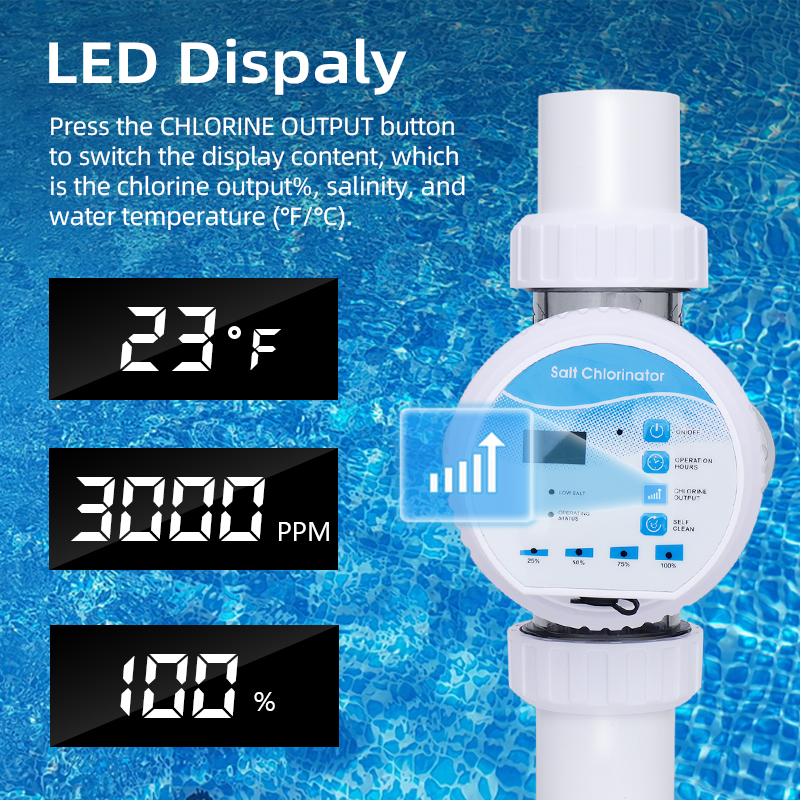
Safety Protection: Includes built-in low-salt alarms, water temperature monitoring (with alerts triggered outside the 10–45°C range), and multiple protection mechanisms against issues such as water flow interruption, overload, and short circuits.
Compact, Integrated Design:
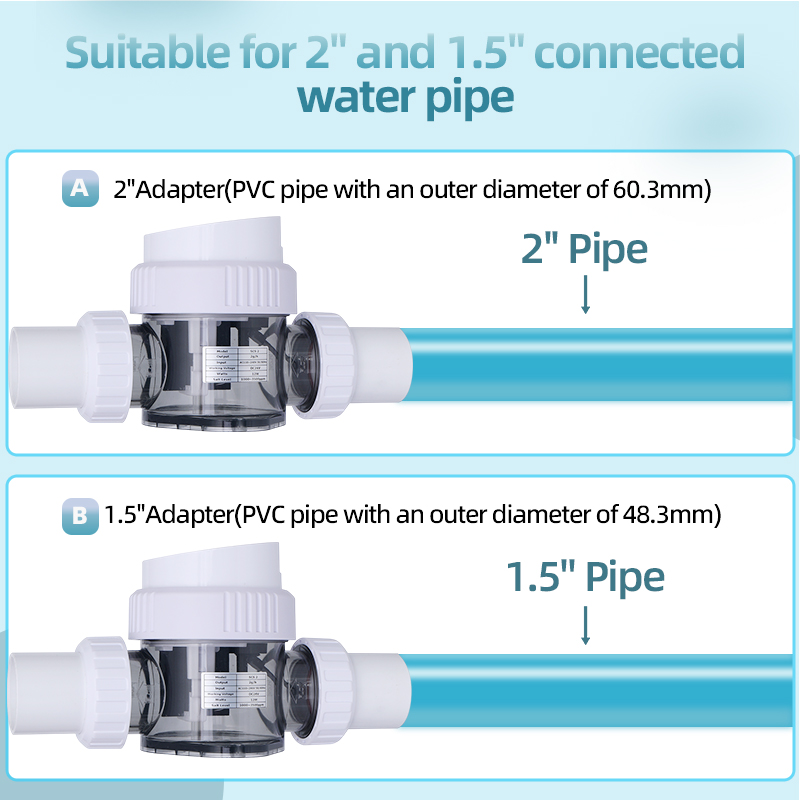
The control panel and electrolytic generator are integrated into a single unit, saving installation space.
Wide Voltage Input:
Supports AC 110–240V input, making it compatible with power standards across different countries and regions.
--------
-------
1. Will a salt chlorinator make the pool water taste as salty as seawater?
No. Pool salt concentrations are typically only 2,500–4,000 ppm, whereas seawater is around 35,000 ppm—a difference of more than tenfold.
At this concentration, the water barely tastes salty; instead, it feels softer and is less irritating to the eyes and skin. As a Chinese supplier of
salt chlorinators, manufacturers like HOTOOK offer OEM/ODM customization—including specifications, branding, and packaging—to help
clients quickly launch their own private-label products.
2. Does salt itself sanitize the water, or is chlorine required?
Salt is not a sanitizer on its own. The actual sanitizing agent is the chlorine produced when the salt chlorinator electrolyzes the salt. Salt serves
merely as the raw material; after sanitizing, the chlorine reverts to salt, allowing for a continuous cycle of use.
3. Once a Pool salt chlorinator is installed, is manual chlorine addition completely unnecessary?
Theoretically, yes, but there are specific situations where supplemental chlorine is needed. When the equipment is properly sized and
functioning correctly, it provides a continuous supply of chlorine. However, manual supplementation may still be required following
heavy rain (which dilutes the water), after a party (when chlorine consumption spikes), or during "shock" treatments.
4. Will the salt corrode pool equipment or surrounding metal fixtures?
With proper maintenance, the impact is minimal. Modern equipment is designed to withstand low-concentration saltwater; the key is
to keep salt levels below 4,000–6,000 ppm and maintain balanced water chemistry. Excessively high salt levels can corrode metal components,
and adequate ventilation is necessary to prevent hydrogen gas accumulation.
5. Does the electrolytic cell (salt cell) require maintenance? What is its lifespan?
Yes, regular maintenance is required, as the electrolytic cell is a consumable part. Calcium scale can build up on the titanium electrode plates,
reducing chlorine production efficiency. For self-cleaning models, inspection every 3–4 weeks is recommended; non-self-cleaning models
require more frequent attention. The typical lifespan is 3–7 years, depending on usage frequency, water quality, and maintenance habits.